




Short answer:
• Animal-assisted therapy for autism pairs licensed clinicians with trained animals to support communication, sensory regulation, and social skills during real therapy sessions, not casual pet visits.
• Look for programs that combine AAT with licensed speech, occupational, or physical therapy, use credentialed animal-handler teams, and track progress toward specific developmental goals.
• Rural, ranch-based centers in Wisconsin offer this alongside hippotherapy and horticulture therapy for children and adults on the autism spectrum.
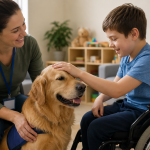
Families searching for autism support often want an alternative to a strictly clinical setting, one where a child’s progress feels natural rather than forced. That search frequently leads to animal-assisted therapy for autism, a therapist-guided approach that uses structured interaction with trained animals to build communication, motor, and social skills. Choosing the right program means understanding how it differs from casual pet therapy and what credentials should be behind it.
At Nature’s Edge Therapy Center Inc, this model centers on licensed speech-language pathologists and occupational therapists who incorporate dogs, cats, a donkey, a llama, pot-bellied pigs, a parrot, and sheep into treatment plans tailored to each patient’s goals.
What Animal-Assisted Therapy Actually Involves
Animal-assisted therapy is not the same as simply spending time around pets. It is a structured, therapist-directed intervention built around measurable outcomes.
• A licensed clinician designs the session around specific goals, such as attention span, fine motor control, or expressive language.
• Trained animals are matched to those goals based on temperament and specific characteristics.
• Progress is documented the same way it would be in a traditional clinic visit.
At Nature’s Edge, Animal-Assisted Therapy is a therapist-guided experience designed to improve a patient’s mental, physical, social and emotional functioning through interactions with an animal, with therapy animals including dogs, cats, a donkey, a llama, pot-bellied pigs, a parrot, and sheep, each chosen for their characteristics and contributions in relation to the patient’s specific goals. A child working on sustained attention or communication skills, for example, might be guided to focus on a story involving one of the animals, turning a sensory experience into a functional skill-building exercise.
Why a Ranch-Based Setting Matters for Autism
Traditional clinic rooms can feel overwhelming for some children on the spectrum, especially those sensitive to fluorescent lighting or confined spaces. A working ranch environment offers a different sensory landscape, one that many families report feels less clinical and more motivating.
Programs combining multiple nature-based modalities can address several developmental areas in a single visit. Therapists work with patients of all ages and abilities utilizing hippotherapy, animal-assisted therapy and horticulture therapy, providing intensive occupational, physical and speech therapy on a ranch setting. This layered approach means a session addressing autism-related communication delays might also involve fine motor tasks in a garden bed or vestibular input from a supervised ride.
According to the CDC’s data on autism prevalence, roughly 1 in 31 children in the United States is identified with autism spectrum disorder, underscoring why families continue to look for varied, evidence-informed therapy options beyond a single clinical modality.
Comparing Program Types
Not every provider offering “animal therapy” delivers the same clinical structure. The table below outlines common differences families should ask about before enrolling.
|
Program Feature |
Clinical AAT Program |
Informal Pet Visit Program |
|
Led by licensed therapist |
Yes |
Rarely |
|
Individualized treatment goals |
Yes, documented |
No |
|
Animal handler credentials |
Certified (e.g., Pet Partners) |
Variable |
|
Progress tracking |
Ongoing clinical notes |
Minimal or none |
A program’s animal team credentials are worth confirming directly. A director who serves as an evaluator for Pet Partners therapy teams and upholds Pet Partners’ guidelines for animal-assisted interventions signals a level of oversight that informal pet-visit programs typically lack.
Questions to Ask Before Enrolling
Choosing a provider is easier with a short checklist in hand.
1. Is the animal-assisted therapy delivered or supervised by a licensed speech, occupational, or physical therapist.
2. Are the animal handlers certified through a recognized body such as Pet Partners.
3. Does the program document individualized goals and measure progress over time.
4. Can the center describe how each animal’s role connects to specific developmental outcomes.
Families who serve children with autism alongside other needs, such as sensory processing differences or communication disorders, should also confirm whether the center coordinates with prescribing physicians, since many programs operate as medically prescribed therapy rather than standalone recreational visits.
Finding the Right Fit for Your Family
Selecting a program comes down to matching your child’s specific goals with a center’s documented clinical structure and animal-handling standards. A ranch-based, therapist-led setting will not suit every family, but for many children on the autism spectrum, the combination of structured therapy and animal interaction offers a motivating path toward communication and independence. Reviewing credentials, asking about goal-tracking, and visiting a facility in person remain the most reliable ways to judge fit before committing to a program.
Frequently Asked Questions
Is animal-assisted therapy covered by insurance for autism treatment? Coverage varies by insurer and by whether the service is billed as part of licensed speech, occupational, or physical therapy. Families should confirm billing codes and prescription requirements directly with a provider before starting sessions.
What animals are typically used in autism-focused animal-assisted therapy? Programs vary, but common therapy animals include dogs, cats, and smaller farm animals such as donkeys, pigs, and sheep, each selected for temperament and the specific skill a session targets.
How is animal-assisted therapy different from hippotherapy? Hippotherapy uses the movement of a horse as a treatment tool for motor planning and sensory processing, while animal-assisted therapy involves guided interaction with a trained animal to support communication, social, and emotional goals. Many centers offer both as complementary services.
Do I need a doctor’s referral to start animal-assisted therapy? Many clinical programs require a prescription or referral since the therapy is delivered by licensed clinicians and may be billed medically. Check directly with the center about intake requirements.
Choosing the right therapeutic environment for a child on the autism spectrum takes time, direct questions, and a clear look at who is actually leading each session. Centers that combine licensed clinical staff with well-documented animal-assisted programming, ranch-based settings, and individualized goal tracking tend to offer the most transparent picture of what a family can expect. Reach out to a program directly to ask about credentials, session structure, and how progress is measured before scheduling an initial visit.